“Yes, but what does it mean for AI to be superhuman?”
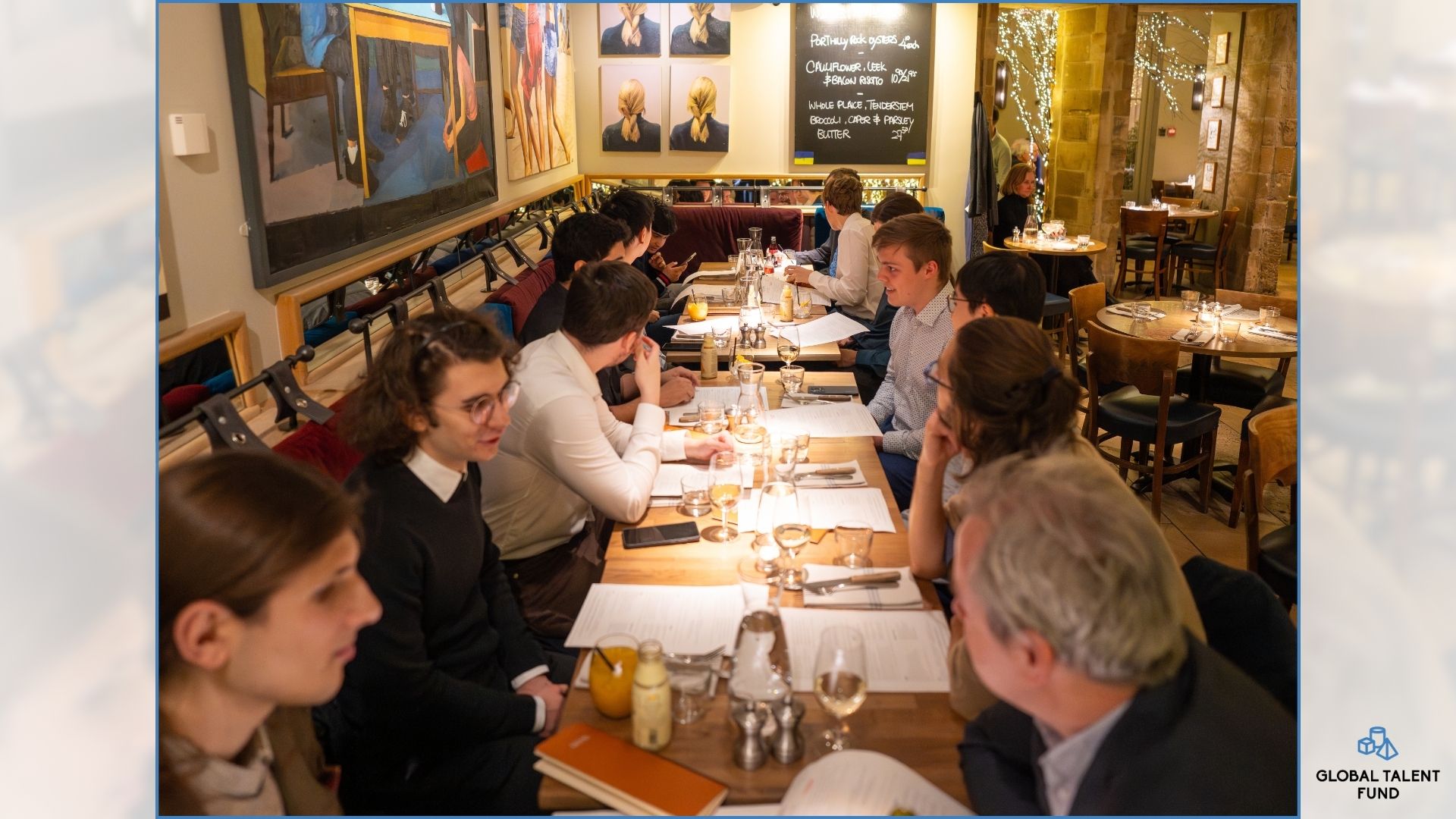
A table of thirteen undergrads at a restaurant in Oxford, just a stone’s throw from the Radcliffe Camera, falls silent. Bright young minds from three continents mull their answers as forks hover over steaks.
Artificial intelligence is now discussed everywhere. But for this group of first- and second-year university students, AI is not just a distant force that will shape their world. They may actually shape AI.
These students are GTF BIG Talent Scholars—former high school math and science Olympiad medalists who are now studying at some of the world’s best universities with support from the Global Talent Fund (GTF).
The Olympiads are a proving ground for many who go on to be leaders in AI, including several of the founders of OpenAI. Some of the Scholars have already done AI internships, and one in their cohort is leaving university early to join a startup.
This is the next generation of STEM talent: confident in their abilities, yet strikingly uncertain about what an AI-driven future holds. It’s a moment of staggering change. There’s a lot to discuss.
But first, does anybody want dessert?
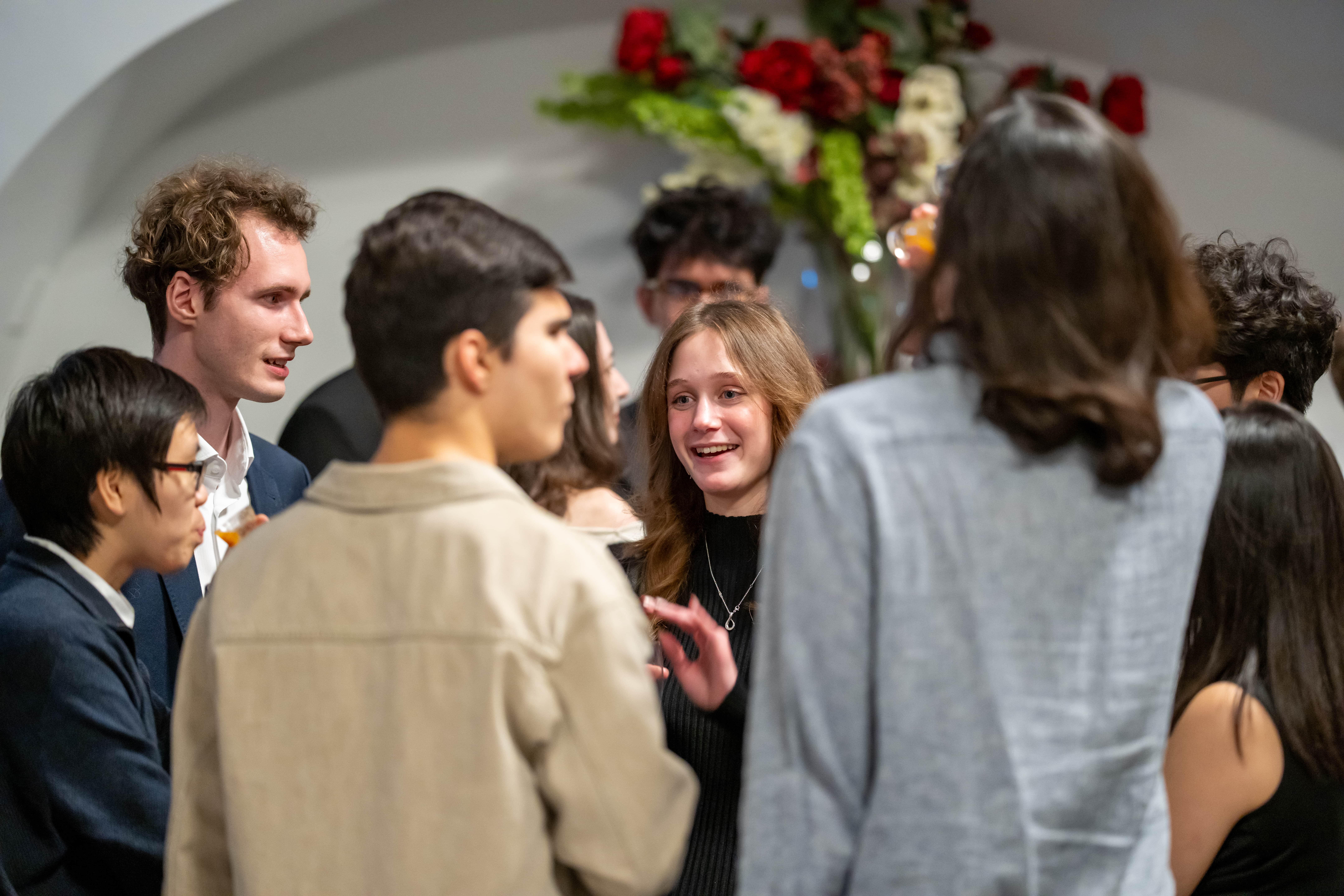
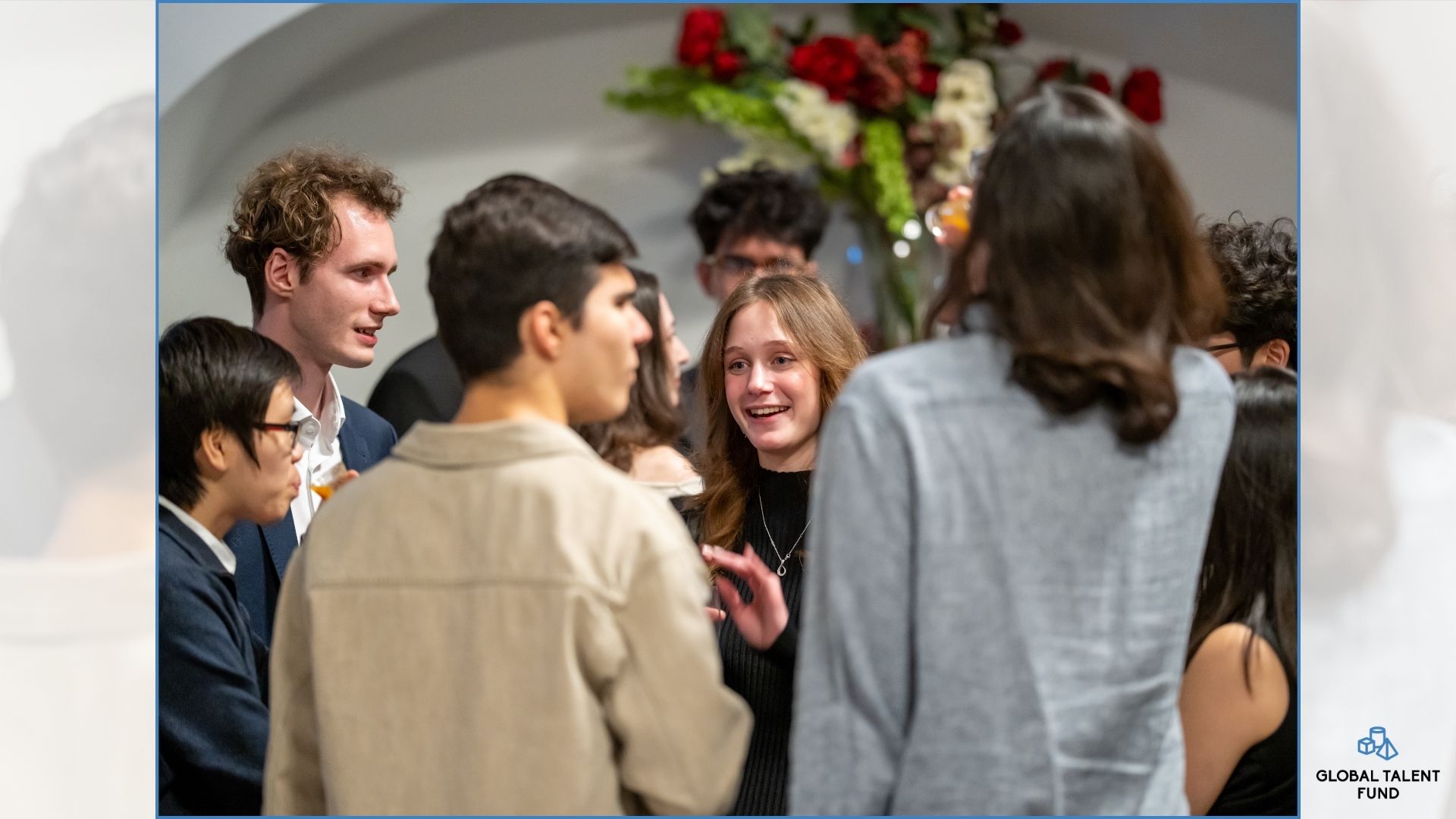
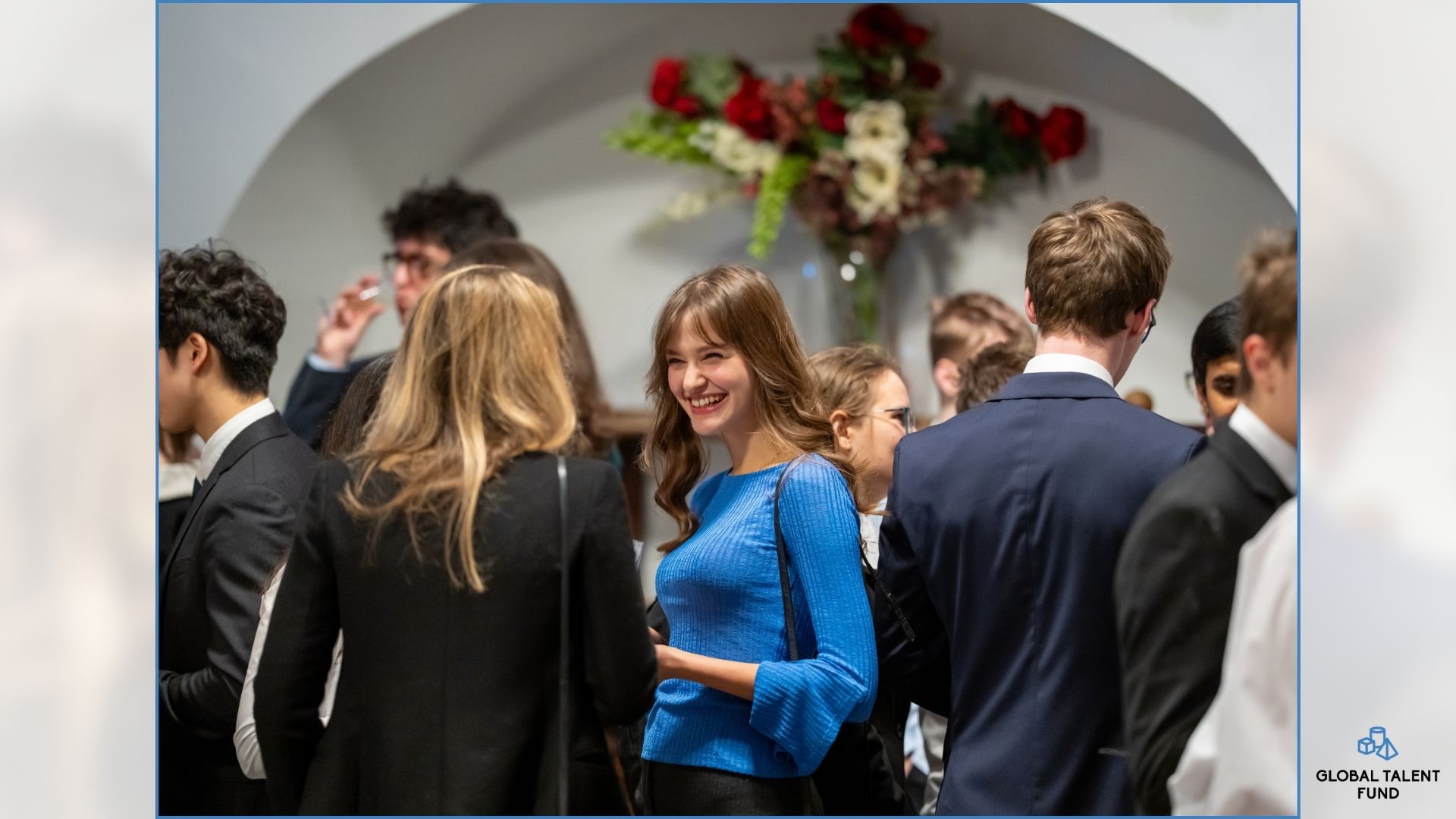
These recent GTF social events—held in Cambridge and London, in addition to Oxford—were not designed to elicit any grand ideas. They are simply a way for the students to get to know each other. A time to let their hair down, put the issues of algebraic topology to one side, and have a little fun.
The air quickly filled with excited chatter and math terms completely alien to this correspondent: eigenvalues and eigenvectors, and jargon from chemistry, biology, and computer science.
Sitting among groups of GTF BIG Talent Scholars, two thoughts converged. Their academic brilliance in math and science is remarkable; yet they are also young people adjusting to monumental change. Most have left home and moved hundreds—or thousands—of miles to study at some of the most prestigious universities in the world. They might be solving math problems of staggering complexity, but they are also learning about the everyday challenges of independent life in a new country.
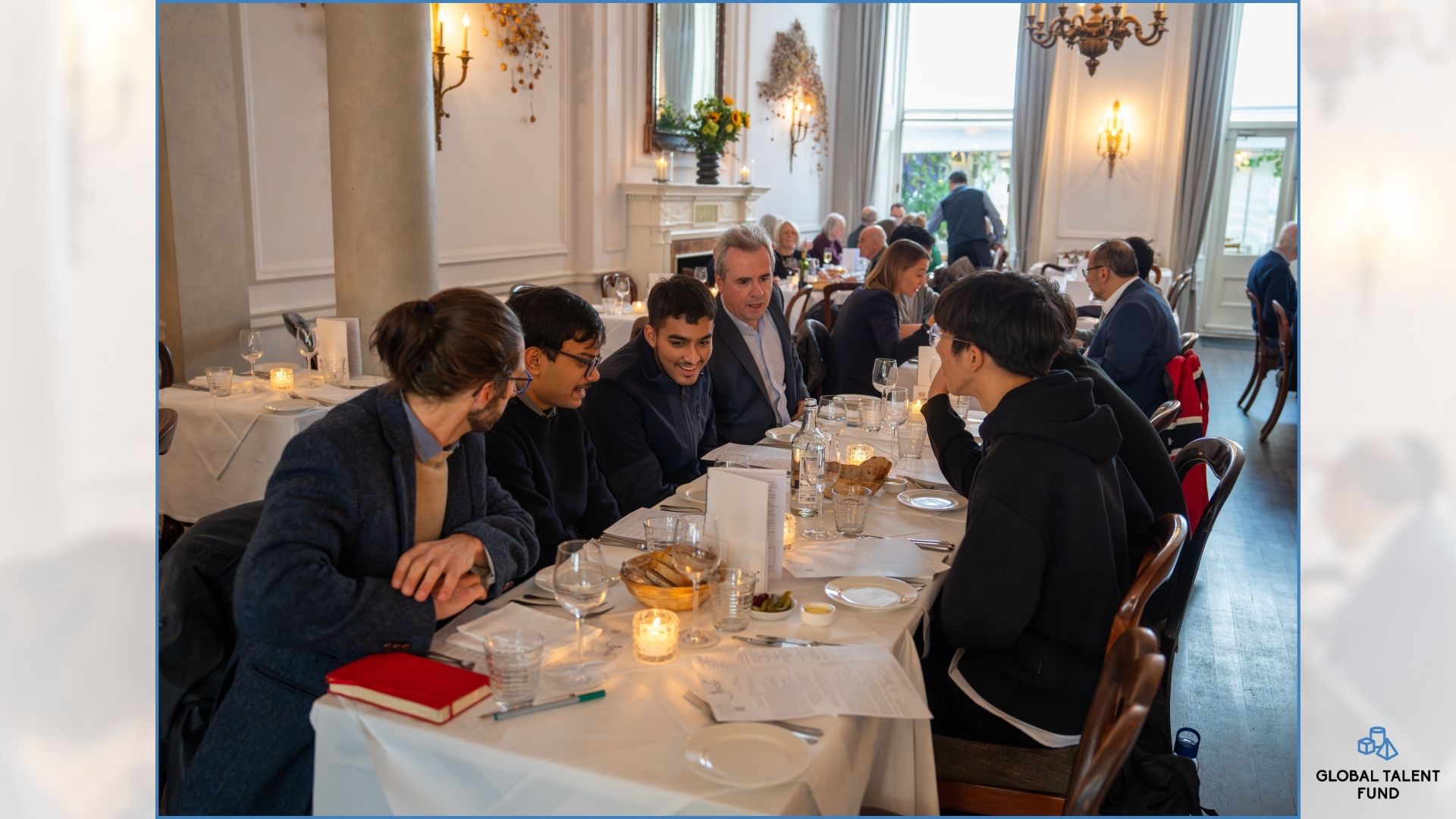
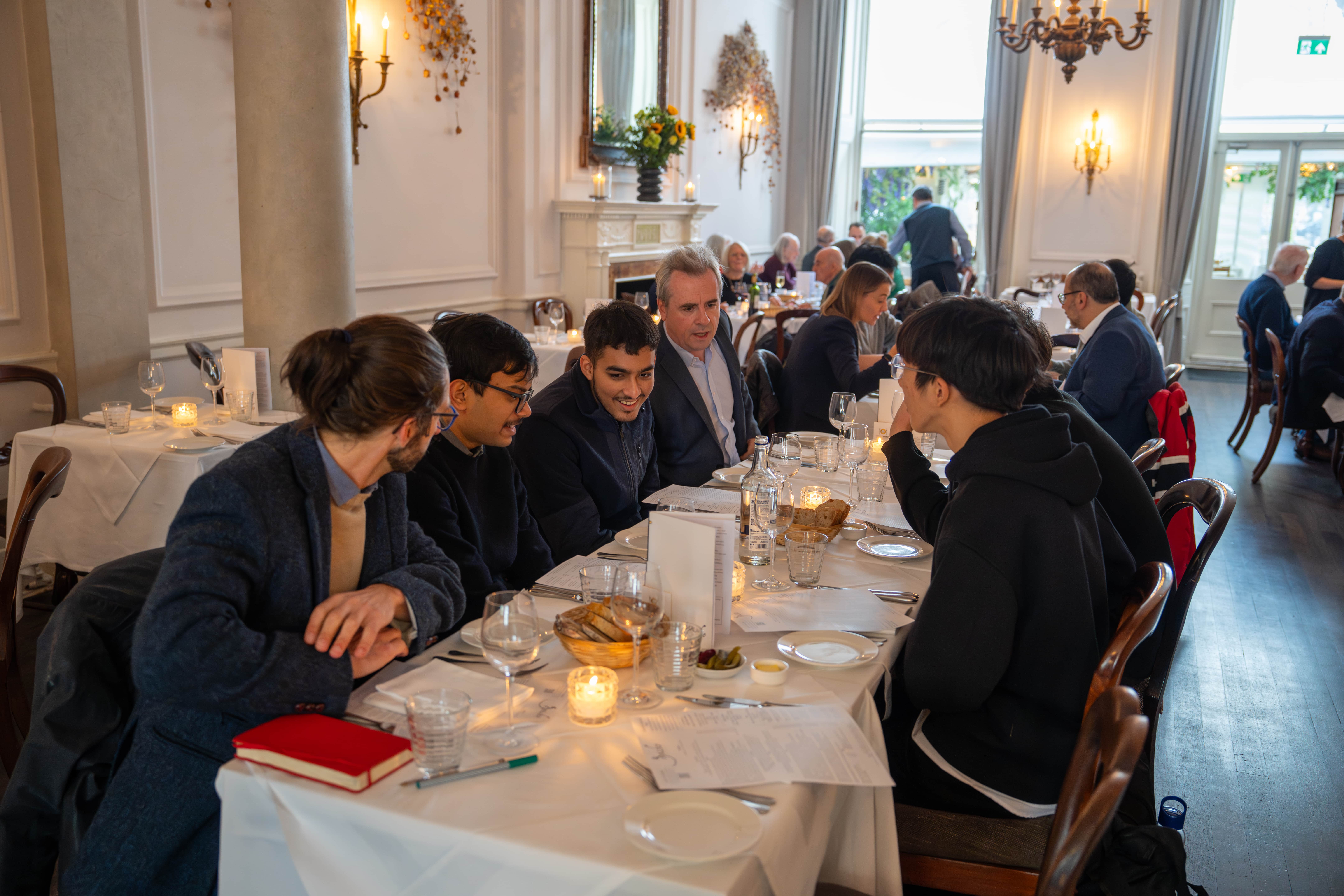
The London meet-up was held at Ognisko, a renowned Polish restaurant located opposite Imperial College, which bustles with the hungry lunch crowd as wafts of stew and pork schnitzel drifted up from the kitchen.
“What do you think of the food at your accommodation?” one BIG Scholar whispers to another in a tone that suggests he already knows the answer. A question that sets off laughter and acknowledging nods.
Scholars compared dorm rooms and commuting times, before friendly jostling over the benefits and drawbacks of various math disciplines. New locations and studies have invariably led to new, sometimes unexpected hobbies.
“I did my first parkrun a few weeks ago. And now I love it,” said a young man from Central Asia dressed in light clothes that seemed more apt for summer than the first icy blast of the coming winter.
He laughed when I pointed this out. “It gets very cold in my country.”
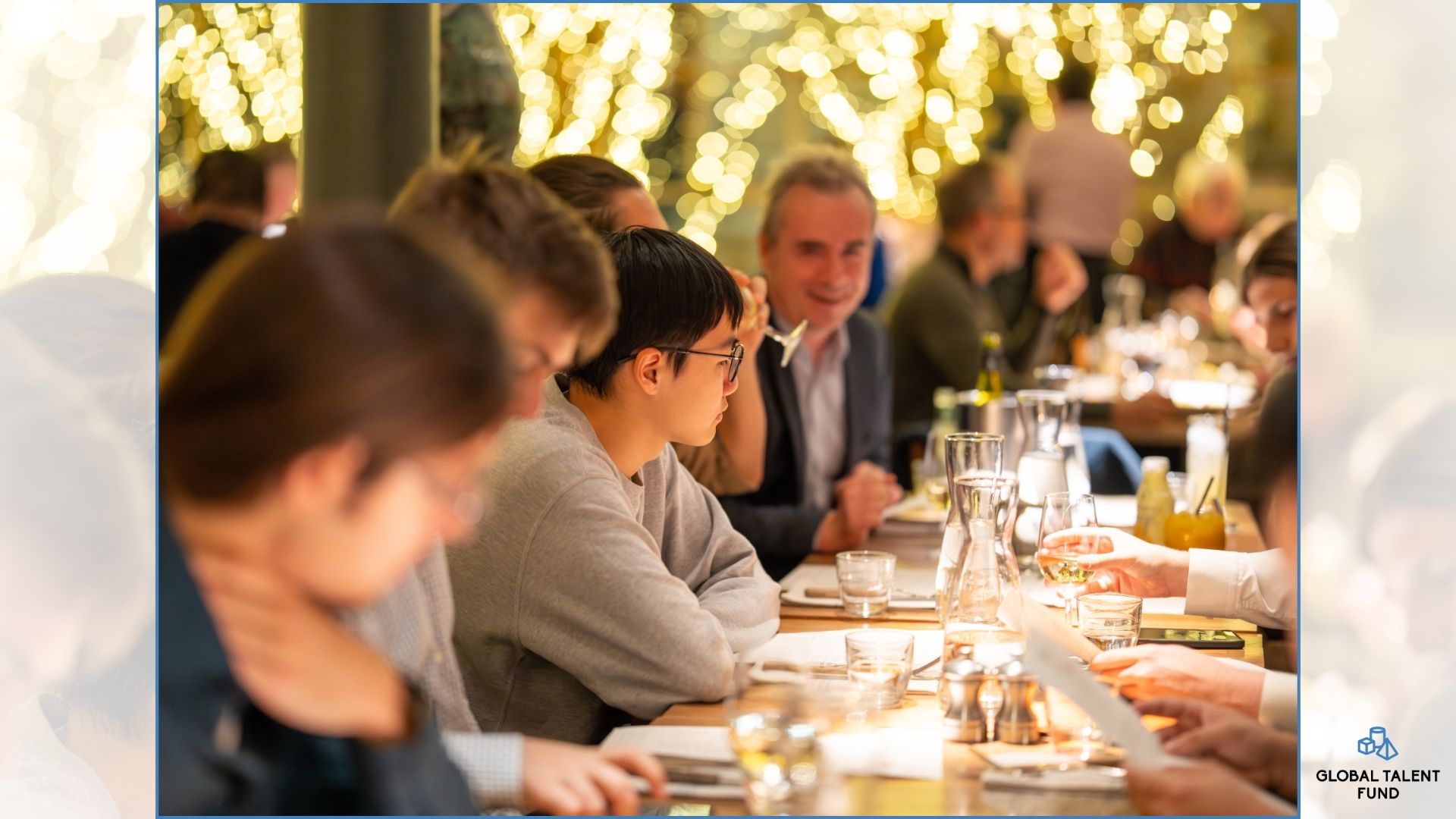
Back in Oxford, Christmas lights were beginning to appear. Students arrive one by one at the Quod Restaurant and Bar, before trooping out as a gang to have headshots taken. Inside, the menus are scanned, and excited chatter erupts in smaller groups along the table.
“The first few weeks of lectures feel like revision. It’s all material we've already seen in Olympiad training,” one Scholar said.
Several students felt the same way. Some were grateful for the gentler start, but already hungry for the moment the course starts to really stretch them. Those in the second year nodded their heads with a slight smirk, knowing full well that things step up, and quickly.
We returned again to the food.
“Why do they serve us such large portions of chips at every meal?” one scholar asked me, genuinely mystified. I could only shrug and apologize on behalf of British university food.
“You should have seen what they served me at school,” I responded.
Running came up again in conversation.
“If I go for a run in the morning, I can focus so much better on mathematics later in the day.” Another said his sport was tennis, and invited his dinner neighbor along for a game one day.
Later in the evening, the conversation turned to AI—perhaps inevitably, considering many of those around the table were studying mathematics and computer science.
What can it do? Where does it fall short? Would a truly “superhuman” AI resemble a person at all, or would it think in shapes we’d struggle to describe? One scholar argued that intelligence without grounding in human experience might feel alien rather than superior. Another questioned the definition entirely.
“If I can’t solve a problem, but an algorithm can, does that make it superhuman? Or just good at a narrow task?” came one question.
“There are few topics that divide top-level thinkers quite like AI,” said another Scholar. “It’s either going to destroy the world or provide us with the greatest evolutionary step,” he continued. It was a question that rolled back and forth across the table as various dishes came and went.
A third student posed a deeper question: “Would you mind if AI solved a math problem that you couldn’t, or does it detract from the human struggle of solving something on your own?”
There was no single answer to this question, or to many others at these events. But immediate answers were not expected. The GTF BIG Talent Scholars, especially those spreading their wings in the first year, are still figuring out the right questions to ask. That curiosity is essential, because the questions they ask and the answers they seek will shape their futures—and perhaps many others’, too.
But first, the chocolate pudding.